[Here’s a link to other forays around my map.]
[kofi]
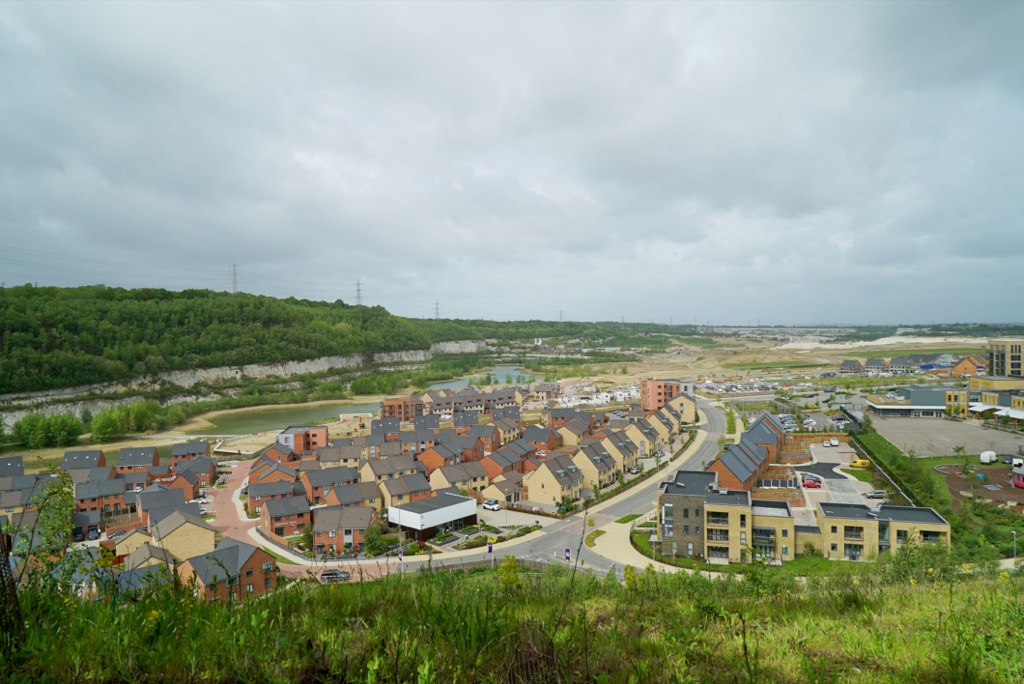
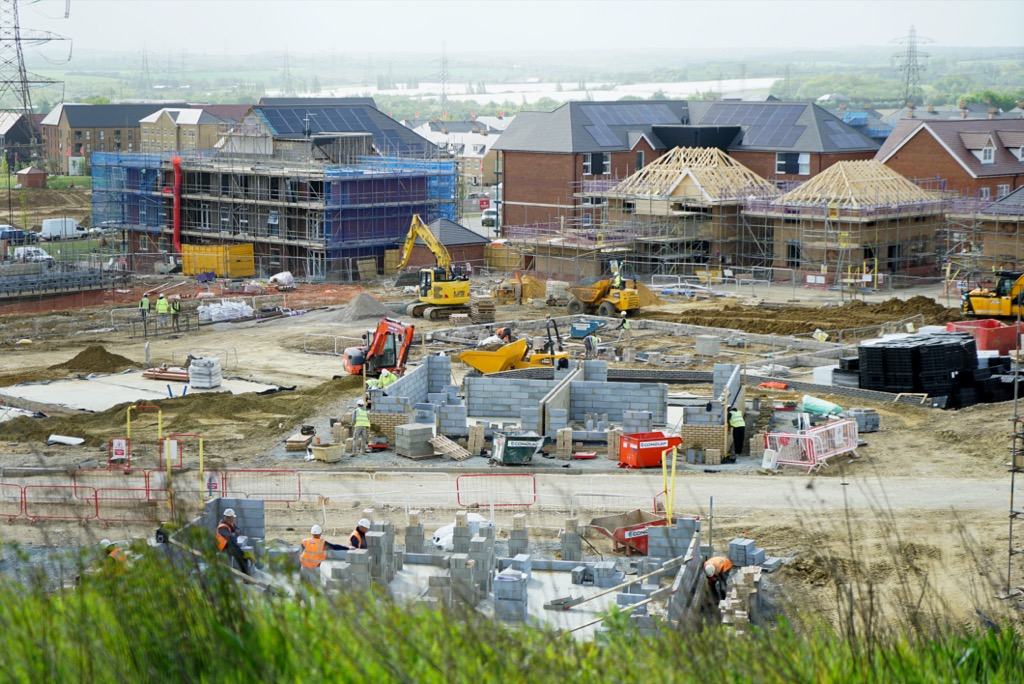
Let’s be clear about this from the start. I was hungover from hell this morning. The grid square that only a few years ago was an expanse of pleasantly bland emptiness had been swallowed by the consumption of an entire new town. I was not in the mood for this.
I sat on a bench in a small park amongst new streets of large family homes and small silver birch saplings. Dark glasses on, cap down over my eyes. I struggled to take it all in.
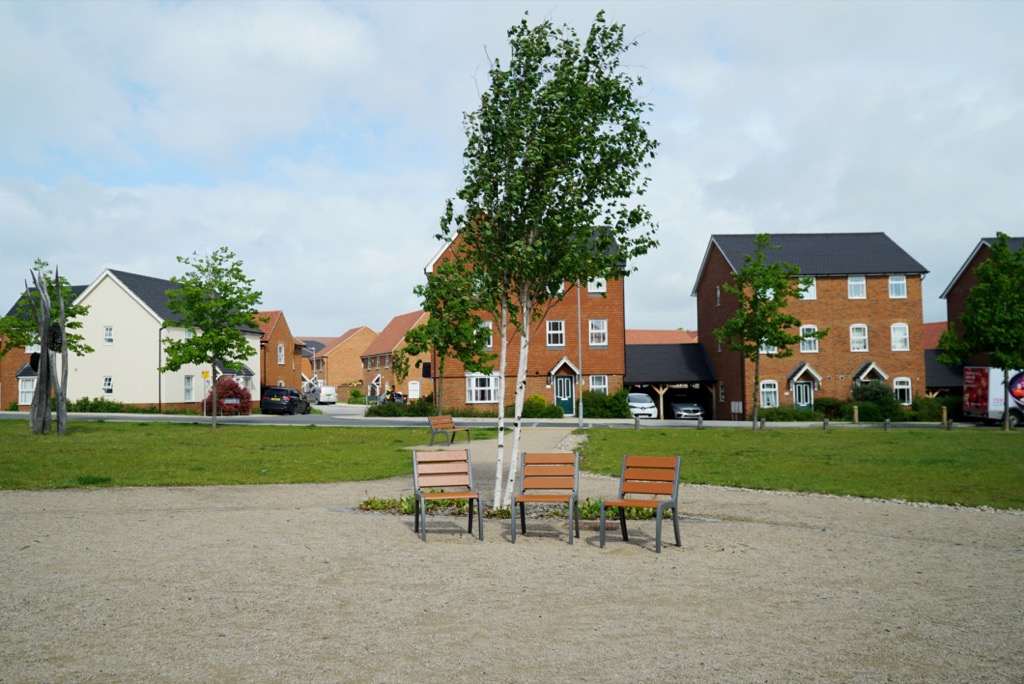
Last night had been my first foray into the bright lights of a city in a year or more and, suffice to say, I got a bit excited. Being amongst so many people again, cycling down busy roads, street cafes filled with laughter and new faces and beautiful people. And then the miracle of a pub where beer arrived whenever I asked for it, amongst friends I had not laughed together with in far too long. You can imagine the rest.
And so now this morning, here in a middle class housing estate where I not so long ago was scruffy brownfield, I had a failure of imagination. How does this happen? How do towns appear where my map implied countryside?
So this episode is about building. I sighed, struggled onto my bicycle, and cycled off wobbily to have a look around.
Ignoring the fact that I live in a house, buy things in shops and use roads every day, I’d rather see natural land than towns. But those facts are, of course, impossible to ignore and all of us depend upon the concretification of the landscape in order to live. Seeing the emergence of a new town made me think differently about towns in general: look out of your window – that road, that building did not used to be here. It is all imposed on what used to be wild. Yet another example of shifting baseline syndrome that I am noticing on my map journey.
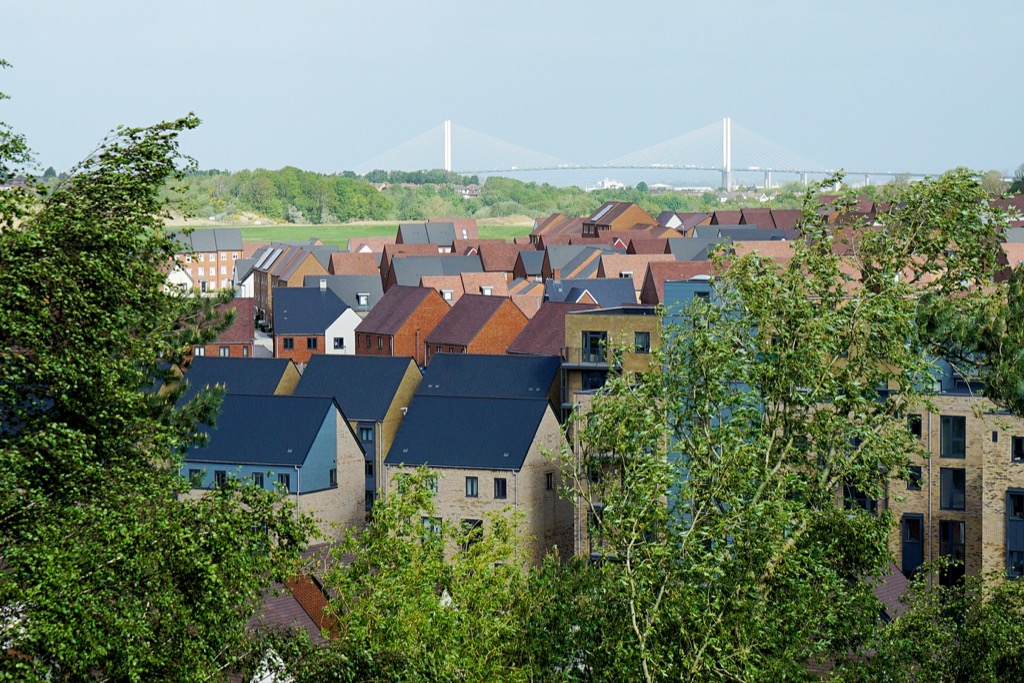
This brand new town for 40,000 people springing from the earth seemed to be doing a fairly good job of things, to be fair. The houses were varied and attractive enough, with a wide range of sizes. The street designs nodded a little to pedestrians and cyclists, even if they were inevitably and depressingly car-heavy. There was lots of open space, playgrounds constructed from nice timber, and several ponds where mallards had moved in happily enough amongst the estate’s new human residents.
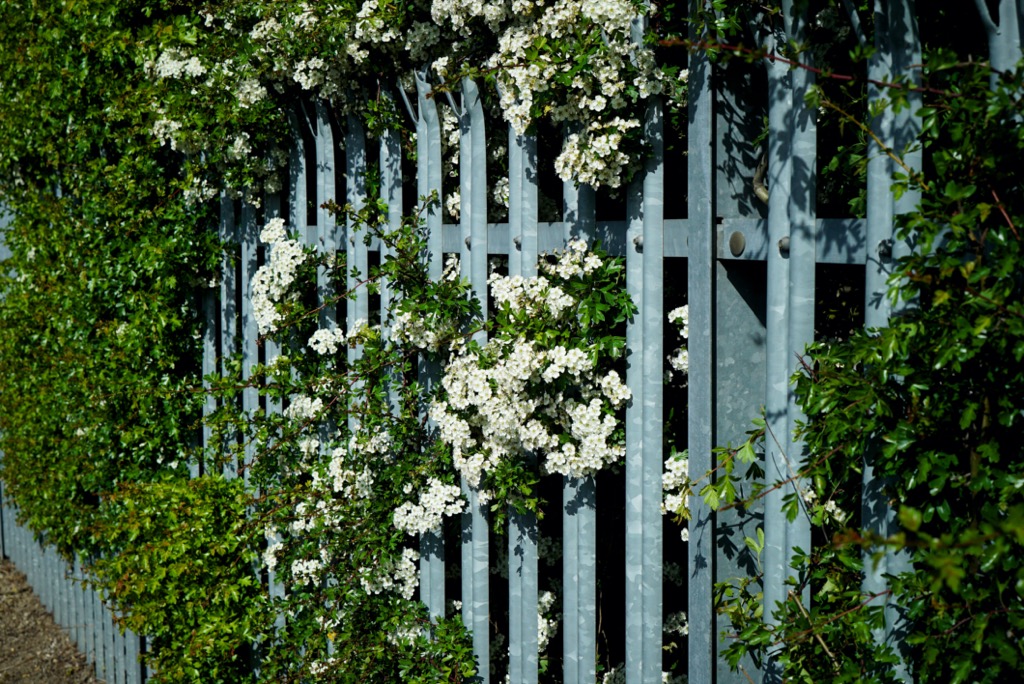
I found an old footpath, squeezed between metal railings, and followed it to try to find an overview of this vast building project. Hawthorn flowers (those darling buds of May) pushed through the railings, their froth of white flowers looking more exuberant and full of life than I felt on this windy May morning. Shakespeare’s sonnet proclaims,
‘Rough winds do shake the darling buds of May,
And summer’s lease hath all too short a date.’
The wind whipped furiously, swirling dust from the building sites into the air and reminding me that even if we remove the natural world from a grid square and turn it into a town, we are still part of nature and the wild universe. Wind is the movement of air caused by the uneven heating of the Earth by the sun. It does not have much substance—you cannot see it or hold it—but you can feel its force. It can dry your clothes in summer and chill you to the bone in winter. It is strong enough to carry sailing ships across the ocean and rip huge trees from the ground. It is the great equaliser of the atmosphere, transporting heat, moisture, pollutants, and dust great distances around the globe. Landforms, processes, and impacts of wind are called Aeolian landforms, processes, and impacts.
Differences in atmospheric pressure generate winds. At the Equator, the sun warms the water and land more than it does the rest of the globe. Warm equatorial air rises higher into the atmosphere and migrates toward the poles. This is a low-pressure system. At the same time, cooler, denser air moves over Earth’s surface toward the Equator to replace the heated air. This is a high-pressure system. Winds generally blow from high-pressure areas to low-pressure areas.
Generally, prevailing winds blow east-west rather than north-south. This happens because Earth’s rotation generates what is known as the Coriolis effect. The Coriolis effect makes wind systems twist counter-clockwise in the Northern Hemisphere and clockwise in the Southern Hemisphere.
The Coriolis effect causes some winds to travel along the edges of the high-pressure and low-pressure systems. These are called geostrophic winds. In 1857, Dutch meteorologist Christoph Buys Ballot formulated a law about geostrophic winds: When you stand with your back to the wind in the Northern Hemisphere, low pressure is always to your left. (In the Southern Hemisphere, low-pressure systems will be on your right.)
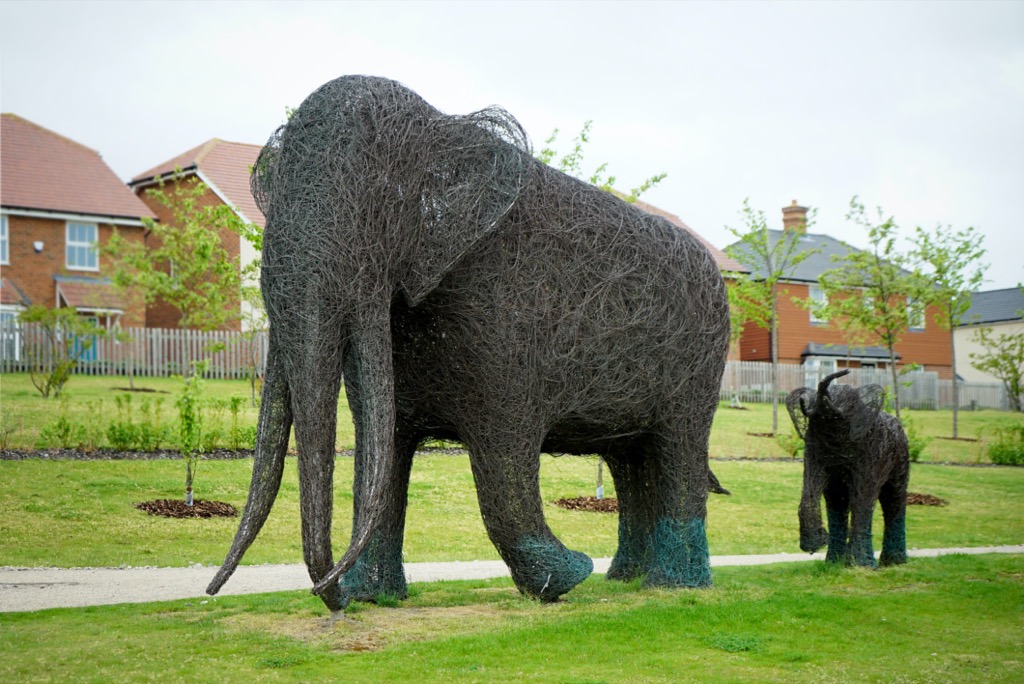
I found an elevated point where I could peep through high fencing and look down on the town being built right across my blank grid square and beyond. Although of course the square was not blank. There have been thousands of species and thousand years of history here, stretching all the way back 400,000 years ago, with mammoth teeth and Neanderthal hand axes having been discovered in the vicinity of all new aspirational commuter housing. Though that sounds narky, building a town all in one go is a heck of an achievement and a fantastic opportunity to do things well. I hope that is the case here.
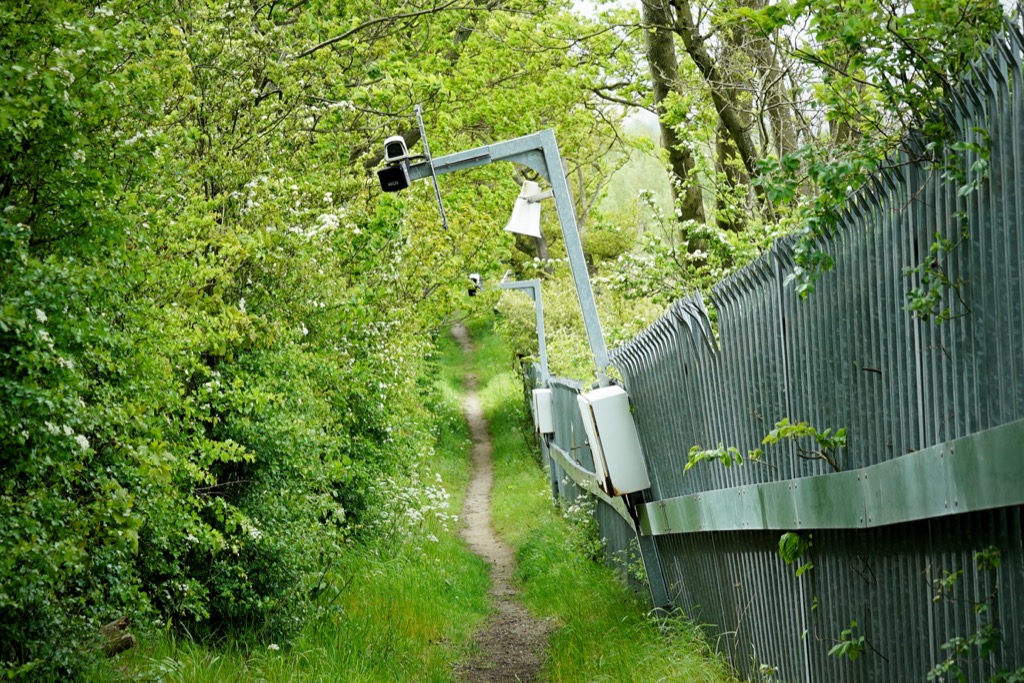
CCTV cameras peered at me as I followed the fence and the footpath around the perimeter of the development. Footpaths flanked by spiked railings and cameras felt more dystopian than I was in the mood for. So while the cameras looked at me I looked instead at some Split Gill mushrooms growing on a fallen log and checked the time by blowing a dandelion clock. The ground around the footpath was covered in so many different species of grass: my grid square has not been as cleared of life as I thought. After flowering is finished, the dandelion flower head dries out for a day or two. The dried petals and stamens drop off, the bracts reflex (curve backwards), and the parachute ball opens into a full sphere. When development is complete, the mature seeds are attached to white, fluffy “parachutes” which easily detach from the seedhead and glide by wind, dispersing.
The seeds are able to cover large distances when dispersed due to the unique morphology of the pappus which works to create a unique type of vortex ring that stays attached to the seed rather than being sent downstream. In addition to the creation of this vortex ring, the pappus can adjust its morphology depending on the moisture in the air. This allows the plume of seeds to close up and reduce the chance to separate from the stem, waiting for optimal conditions that will maximize dispersal and germination.
Dandelions are also known as blowball, cankerwort, doon-head-clock, witch’s gowan, milk witch, lion’s-tooth, yellow-gowan, Irish daisy, monks-head, priest’s-crown, and puff-ball; other common names include faceclock, pee-a-bed, wet-a-bed, swine’s snout, white endive, and wild endive.
The English folk name “piss-a-bed” (and indeed the equivalent contemporary French pissenlit) refers to the strong diuretic effect of the plant’s roots. In various northeastern Italian dialects, the plant is known as pisacan (“dog pisses”), because they are found at the side of pavements.
In Swedish, it is called maskros (worm rose) after the small insects (thrips) usually present in the flowers. In Finnish and Estonian, the names (voikukka, võilill) translate as butter flower, due to the color of the flower. In Lithuanian, it is known as “Pienė”, meaning “milky”, because of the white latex that is produced when the stems are cut. The Danish name mælkebøtte (sometimes fandens mælkebøtte) means “milk bin” (“the devils milk bin”) and also refers to the milky latex (and its ability to spread). The Welsh (dant-y-llew), German (Löwenzahn), Norwegian (løvetann), Portuguese (dente de leão) and Spanish (diente de león) names mean the same as the French and the English names. In Czech it is known as pampeliška where the “liška” part directly translates to a “fox”, possibly due to the colour of the flower.
Dandelion seeds can keep themselves aloft by generating a type of vortex previously thought too unstable to exist, helping explain how these flowers have dispersed across the planet. Each dandelion seed is attached to a bundle of roughly 100 feathery bristles known as a pappus, whose name derives from an ancient Greek word for grandfather due to its resemblance to a beard. This structure prolongs the descent of seeds by dragging on the air a bit like a parachute, ensuring that horizontal winds can help carry the seeds farther. Using long-exposure photography and high-speed imaging, researchers discovered that a kind of stable air bubble known as a vortex ring remained a fixed distance from the seeds. Experiments with silicon disks of varying porosity that imitated the aerodynamics of a dandelion pappus suggested the circular geometry and airy nature of the pappus is tuned precisely to stabilise these vortex rings, helping them deliver four times more drag than a solid disk with the same area. Prior work had found that objects could form vortex wings in their wake, but these either stayed anchored to these items or flew downstream. This newfound type of vortex ring was previously thought too unstable to actually occur, and suggests examining nature could reveal other as yet unknown kinds of fluid behaviour.
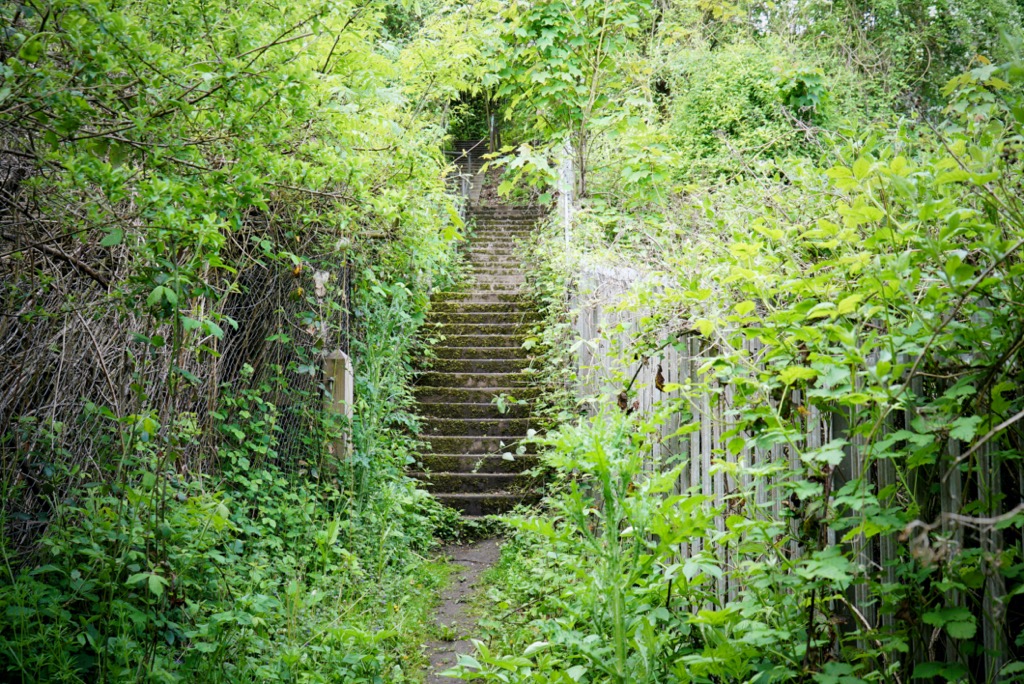
I headed down a narrow green path, overgrown with the riotous growth from the recent mild, wet weather. I passed round a huge, impenetrable mass of brambles and beneath a huge pylon, its cables all a-fizzing and crackling. The sound is the effect of the high voltage on the air surrounding the cable. Air is normally a very poor conductor of electricity. But if a sufficiently high voltage is applied across a small distance, electrons from the air molecules are stripped off and start to form a current. This in turn causes intense heating of the air – resulting in crackle and hiss. It’s most common during damp weather, when the air becomes a better electrical conductor.
Noisy also was the massive road that the path led me to, right up to the hard shoulder and the closest I have got on this map to the violent, roaring, stinking, awesome power and speed of modern life. What on earth would the local Neanderthals have made of all this? What or who will be here 400,000 years from now? Such thoughts only made my head hurt (more) so I retraced my steps down the tangled, overgrown footpath and returned to the newly built streets and homes and schools. (I saw that two small supermarkets had been installed and a community centre, but couldn’t see any evidence of sports facilities, independent retail shops, libraries, doctors or places of worship.)

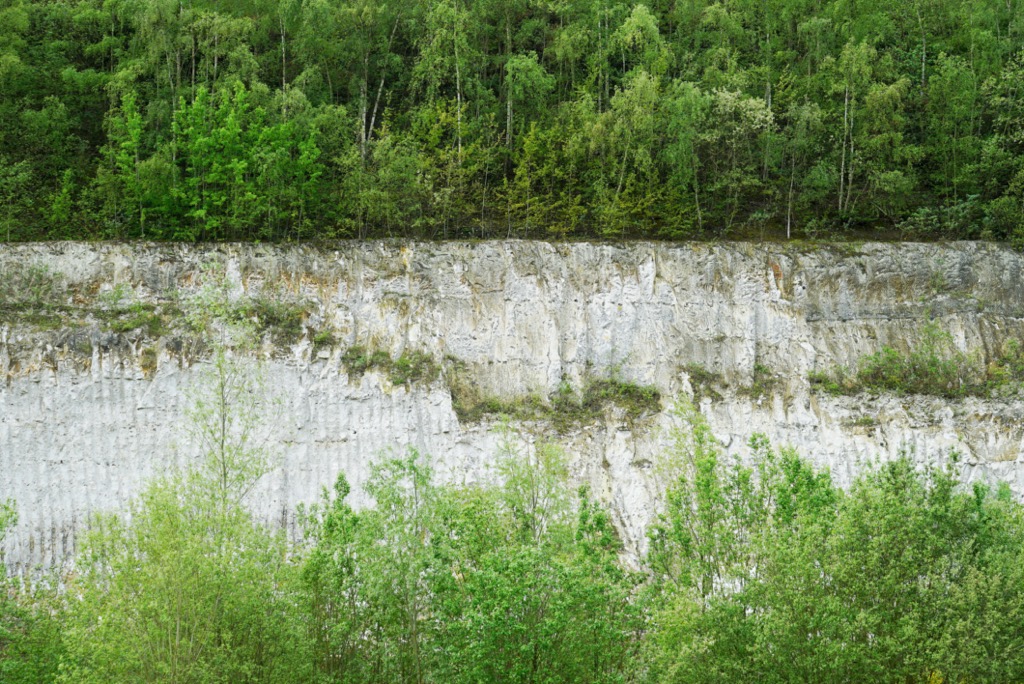
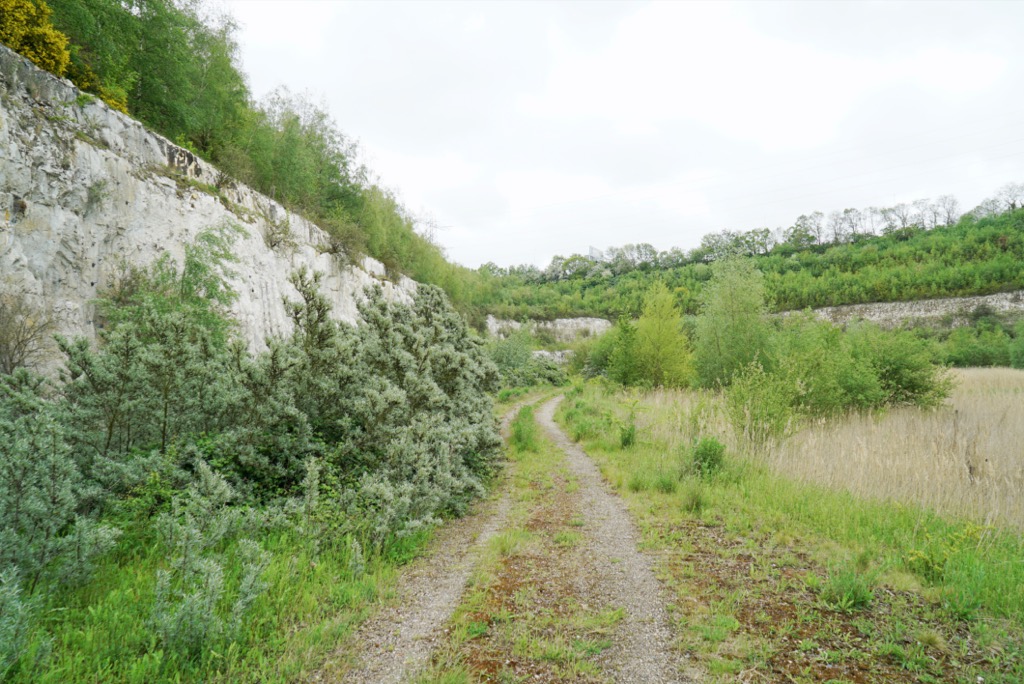
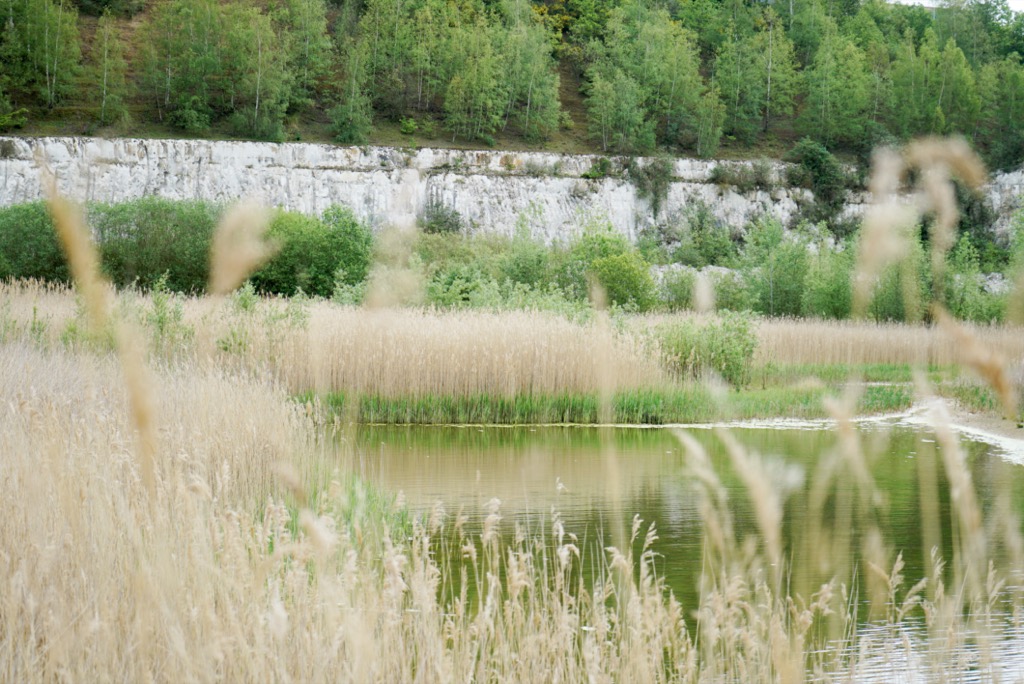
The town is being built on the site on an old cement quarry, with sheer white cliffs dropping into the huge, wide bowl now steadily filling with buildings. I free-wheeled down the smooth new roads, past the blossom of a solitary cherry tree, following my nose towards a lake I had seen from up on the cliffs. I fully expected it to be fenced off, out of bounds, keep out, but I thought I ought to try.
And then there they were! Down by the lake! Swifts! Hundreds of them screaming around the sky! They’re back!
Fifteenth of May. Cherry blossom. The swifts
Materialize at the tip of a long scream
Of needle. ‘Look! They’re back! Look!’ And they’re gone
On a steep
Controlled scream of skid
Round the house-end and away under the cherries…
They’ve made it again,
Which means the globe’s still working, the Creation’s
Still waking refreshed, our summer’s
Still all to come —
And here they are, here they are again
Erupting across yard stones
Shrapnel-scatter terror. Frog-gapers,
Speedway goggles, international mobsters —
A bolas of three or four wire screams
Jockeying across each other
On their switchback wheel of death.
They swat past, hard-fletched
Veer on the hard air, toss up over the roof,
And are gone again.
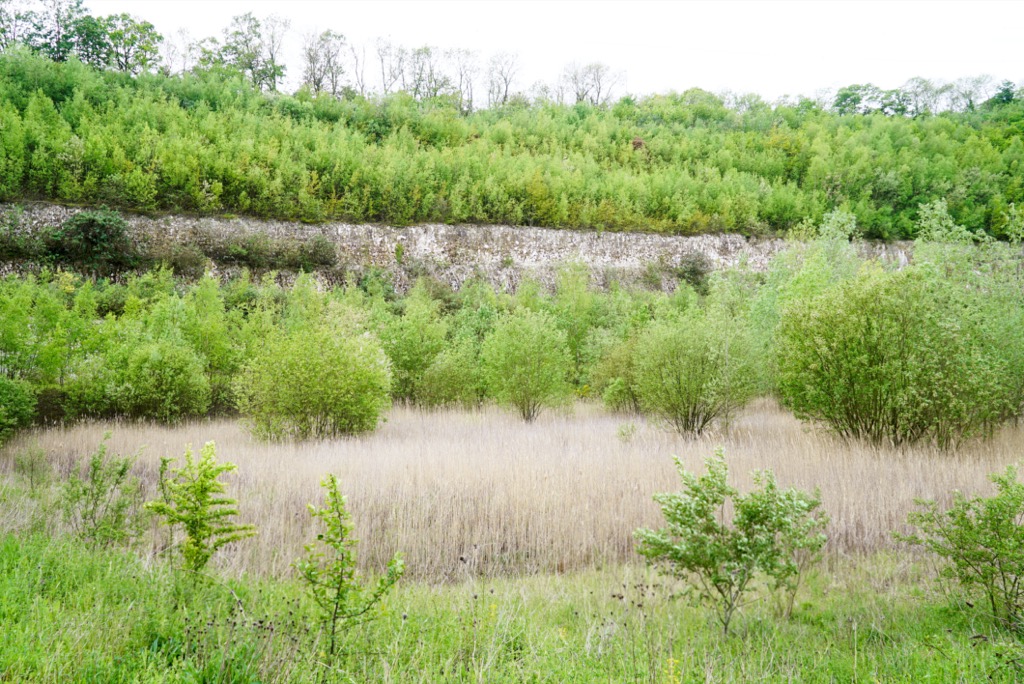
They’ve made it again which means the globe’s still working. I love that line. It was so funny to find the swifts here (and a fair few house martins too), back from their migration to Africa. Here on this grid square which I had thought was going to be a story of building and the removal of nature, I discovered this lovely pond with reed beds and the steep forests birch rewilding the quarry walls (a steep greenness that feels more like wild Austria than English suburbia), and crowning it all the majesty of swifts. Swifts are right up there amongst my favourite wild creatures and they score extra for telling me that summer evenings are on their way again.
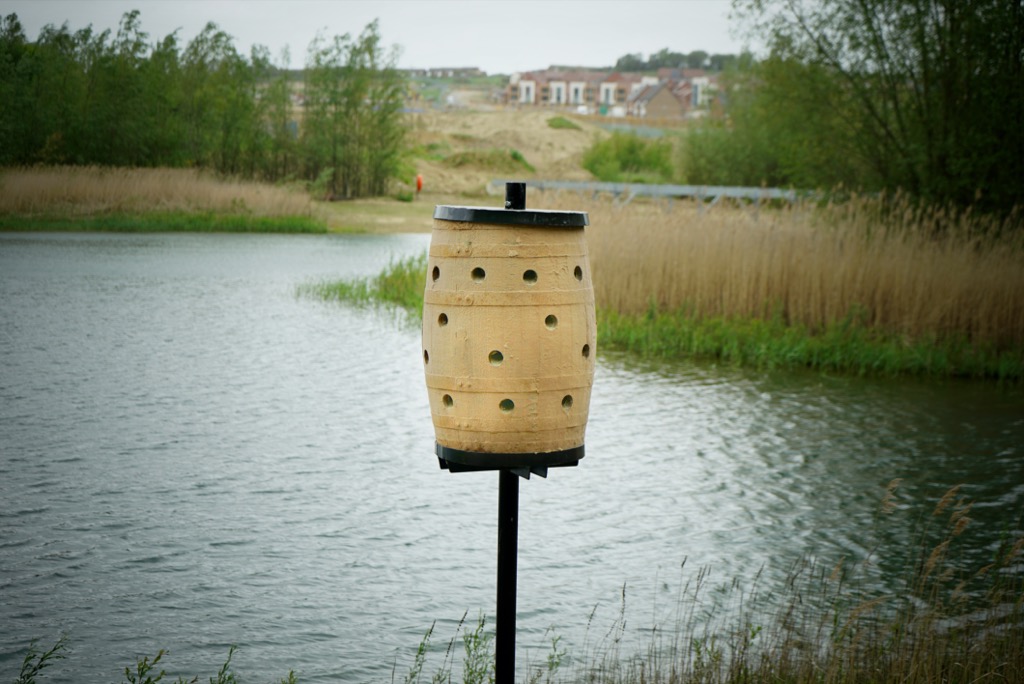
Watch the skies for their dashing drama-filled flights. In cold wet weather they will be feeding over local ponds, flooded gravel pits and reservoirs, but on fine days they will be high overhead, feasting on flying insects. They have flown from the Congo right around West Africa and across the Sahara to reach us. Amazing flights of extreme endurance. From Morocco they can, if the weather is good, fly non-stop to the UK. They can do this last lap in an incredible two days.
They have come back to us to breed and even though you won’t have seen them fly in, they may now be nesting in your eaves. Swifts have shared our buildings ever since the Romans came to Britain. They still breed in our eaves and gables, but won’t be for much longer, as modern and renovated buildings exclude them. Unless we help them, Swifts will vanish from the UK. Tragically, we have lost over half our Swifts in just the past 25 years.
Swifts live in perpetual summer. They inhabit the air like nothing on the planet. They watched the continents shuffle to their present places and the mammals evolve. They are not ours, though we like to claim them. They defy all our categories and present no passports as they surf the winds across the world, sleeping in the high thin air, their wings controlled by an alert half-brain.